



Baxter Green Architects worked with Chicklade Estate to develop Chicklade Service Station, Chicklade, Wiltshire. The proposed development aimed to provide a contemporary and exciting facility for local residents and users of the A303, set within an attractive landscape and providing high-quality regeneration to this prominent site.
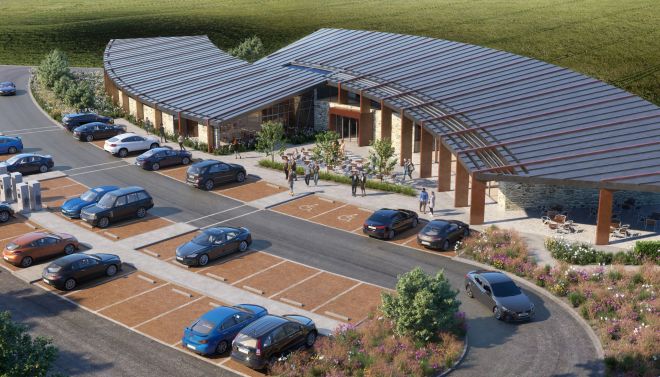
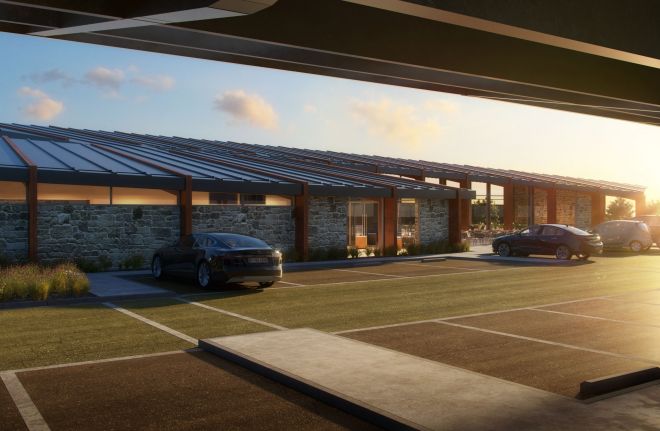
The design and approach was widely praised, ‘The proposals involve the redevelopment of the site with a modern contemporary building that will provide an innovative and exciting appearance to the site. The curved main service building is to have sweeping roofs, and an unusual footprint providing interest to the architectural vernacular and character of the site. The materials are of good quality, using natural stone and timber along with full height glazing, all of which are considered to be sympathetic to and in keeping with the rural character of the area.’ Planning officers report
Location
Chicklade, Wiltshire
The Work
- To create a high-quality building to frame and define the site with an active frontage.
- A high-quality new public space to compliment the location.
- Make use of the new facility to create a strong focal point for the area.
- A contemporary solution that avoids pastiche and creates a positive relationship with the immediate and wider landscape.
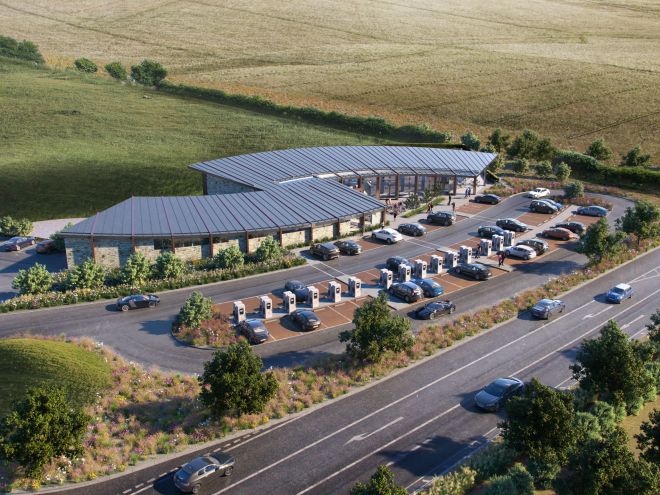

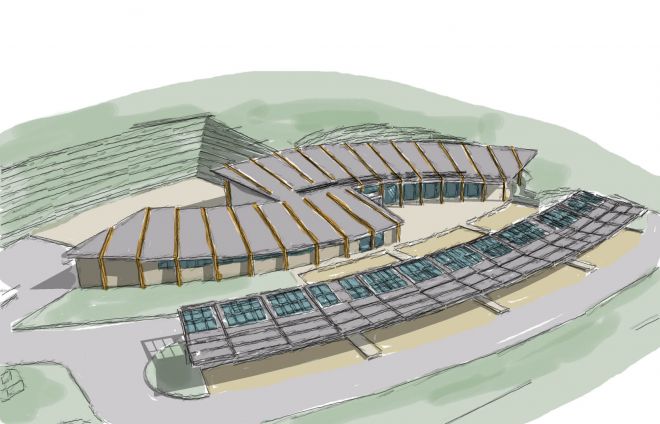
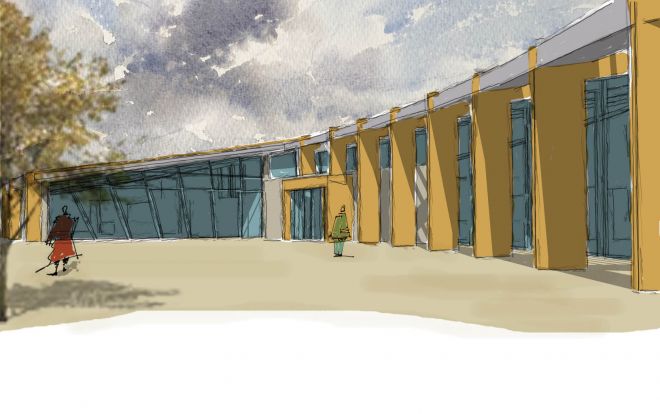
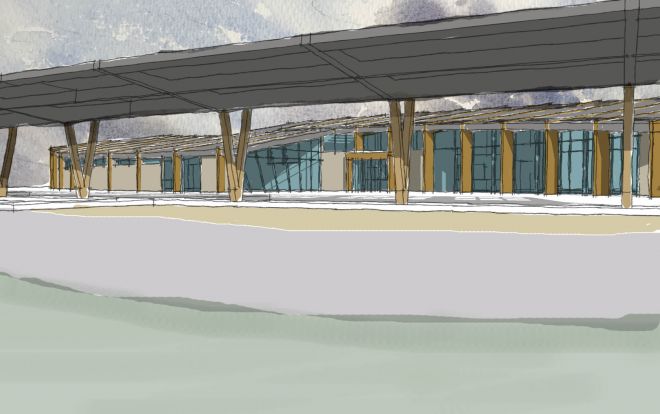

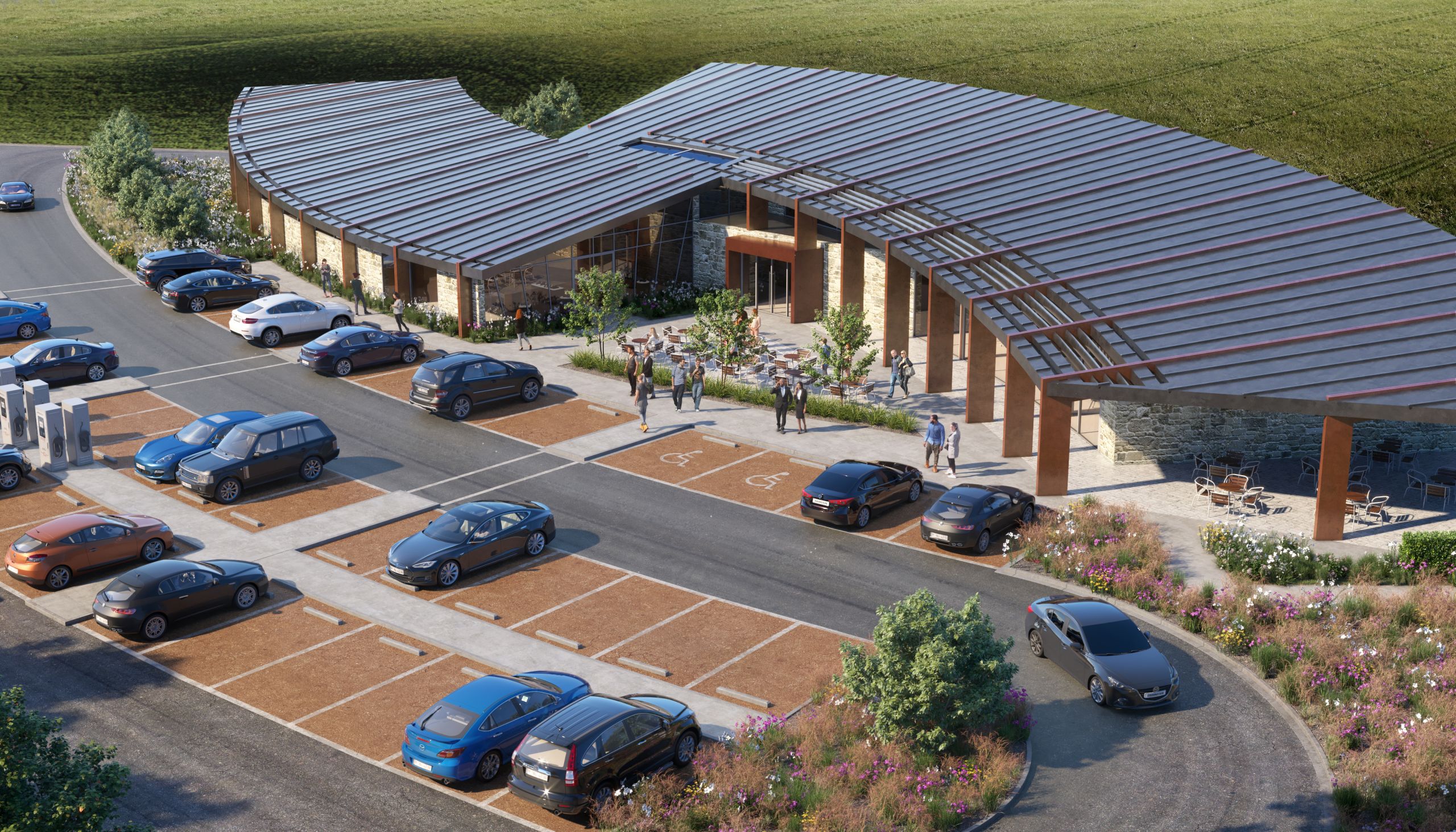


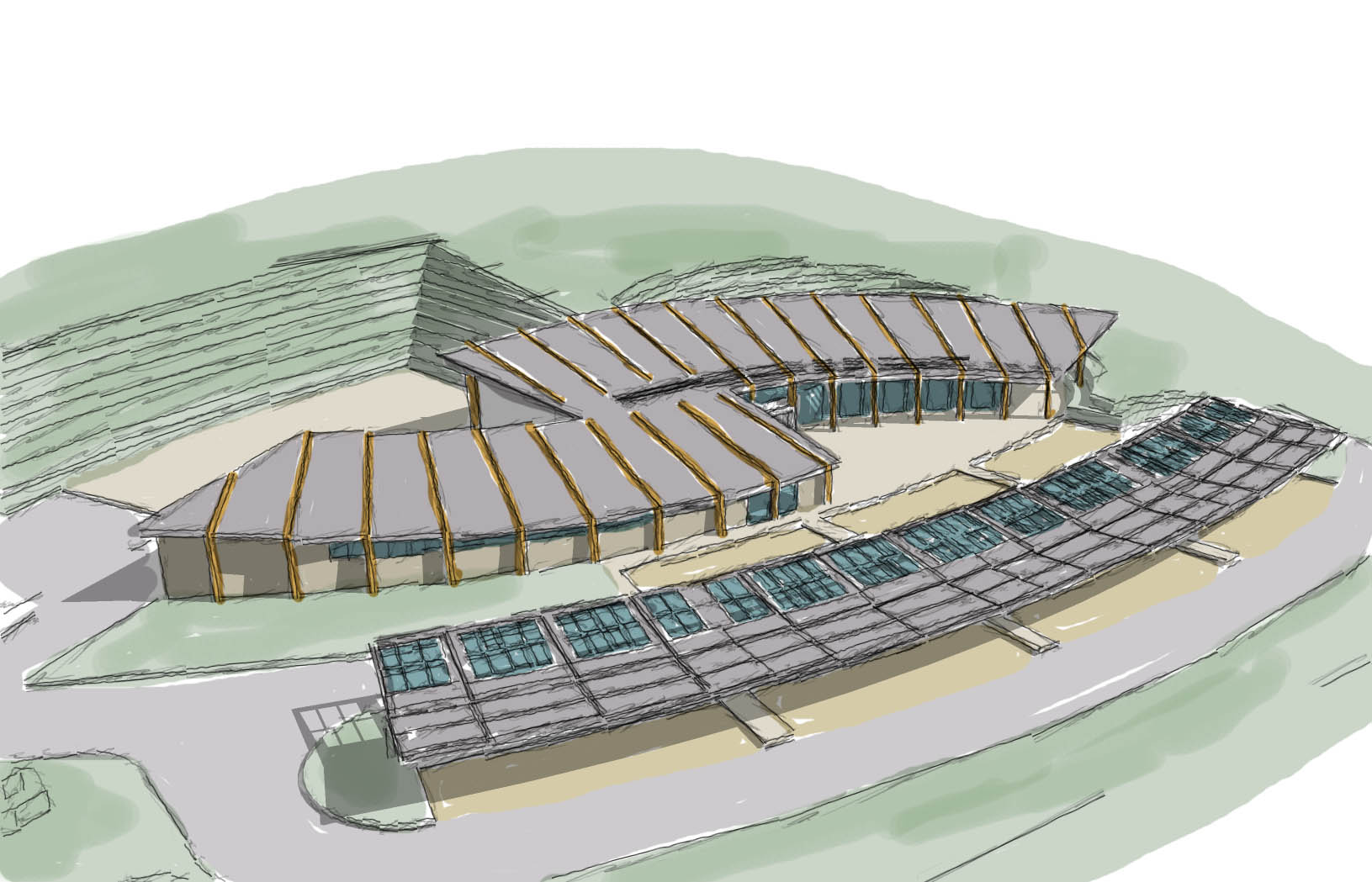
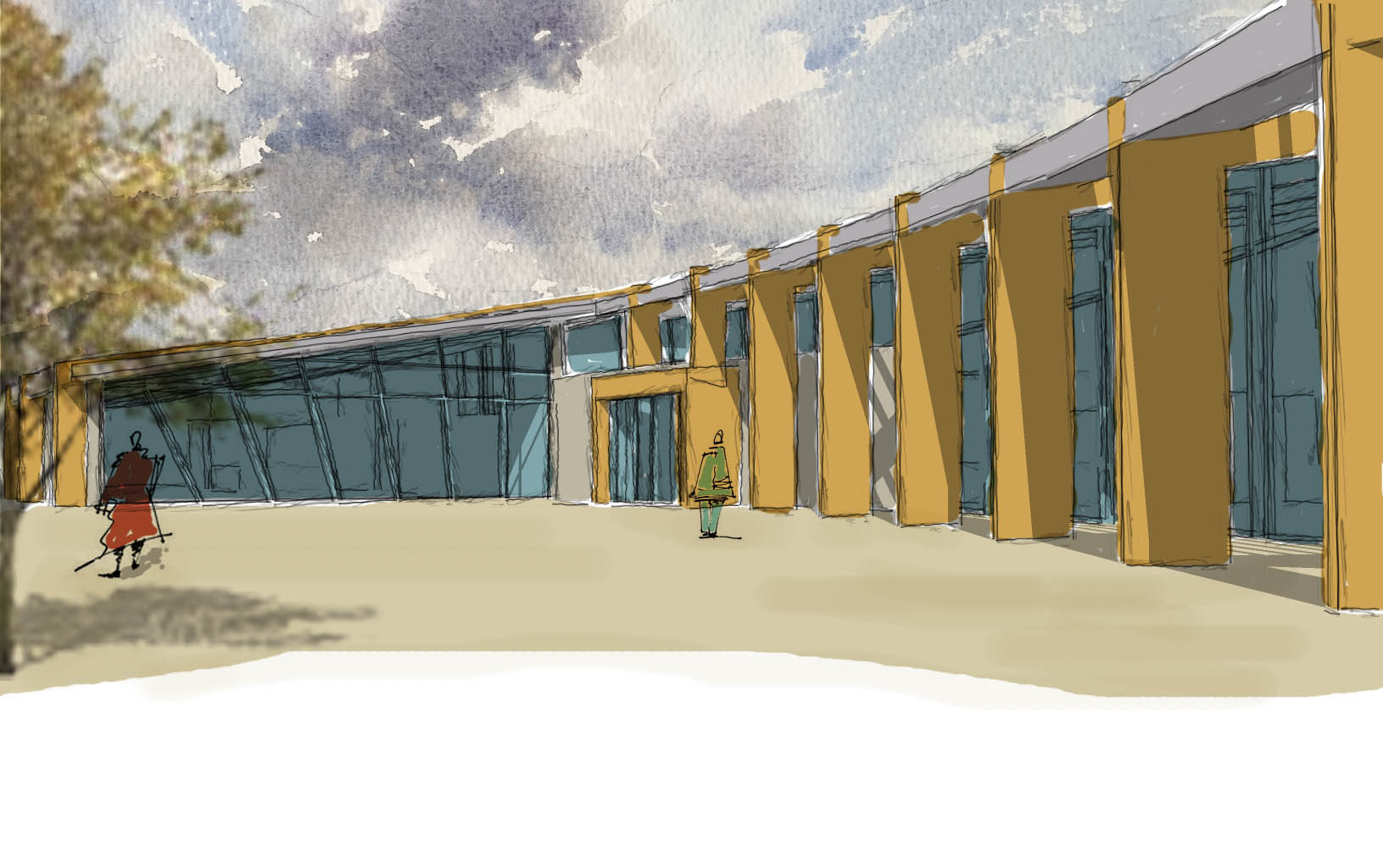
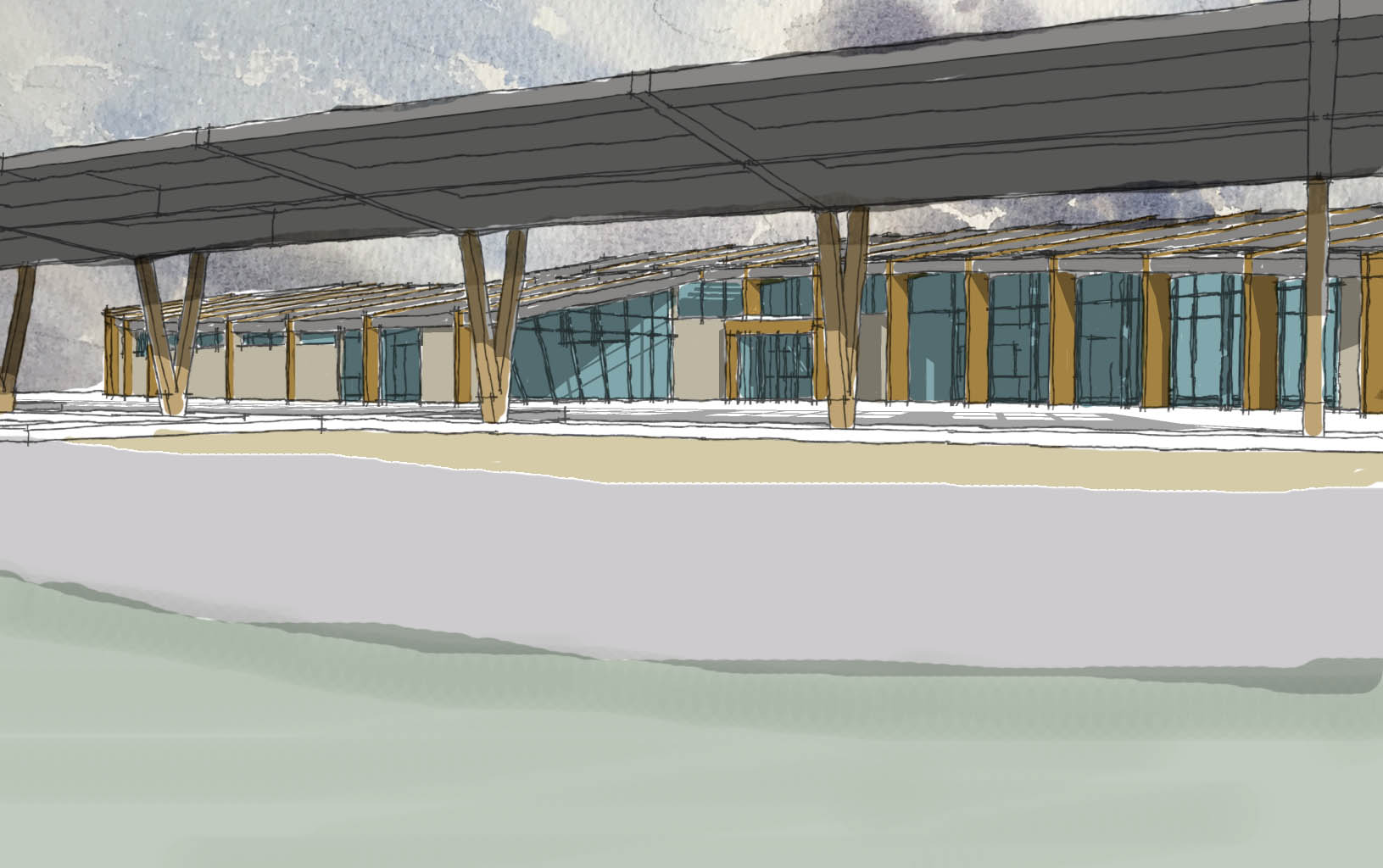
It is a distinctive large-scale landscape within the West Wiltshire Open Chalk Downlands with the immediate area to the site comprising predominantly arable farming. The site has long been established as a service station with a café and petrol filling station with direct access off the A303.
The proposals have been directly informed by a design-led approach that seeks to address the inadequate facilities while maximising the use of the site in a highly sustainable manner. The proposed development has been designed to provide:
- Legible, convenient, and safe access and accessibility to the site by both car and pedestrians.
- An attractive landscape respecting existing features on the site while offering improvements.
- Facilities for the various needs of all users.
- Sustainable drainage design.
- An economically viable development.
The design approach was to avoid a large commercial building and to try and integrate the development into the landscape. The curved floor plan is used to create a curved open conical tapering roof using the same pitched roof throughout. The form creates the appearance of two buildings linked with one roof with the eaves tapering and the structure expressed as a skeleton highlighting the roof form.
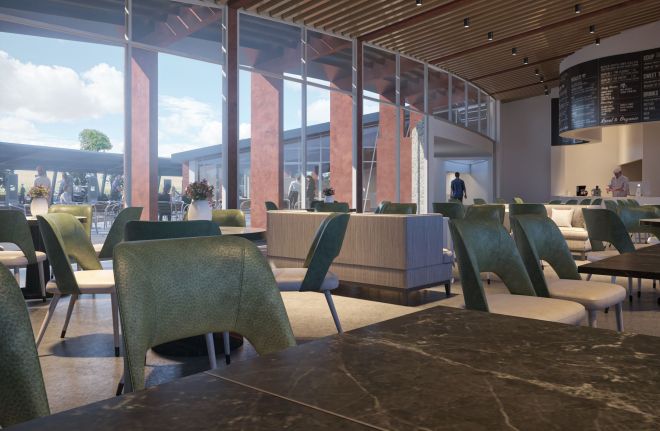
The design included extruded louvres set within the overhanging roof to help prevent heat gain during the day to this glazed south-facing façade. The full height glazing to the café / restaurant give this façade a completely open outlook and views through to the north external seating area and landscape from the front courtyard. The section of the building creates ideal natural ventilation with the high-level glazing on the north elevation being electronically operated while being protected from the prevailing wind.